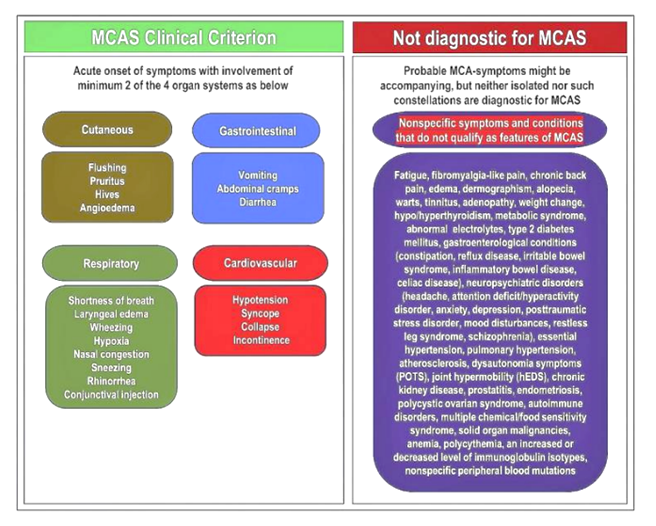
Diagnosis of MCAS
The diagnosis of MCAS requires the simultaneous presence of three key criteria:
- Typical Clinical Signs: The patient should exhibit severe recurrent acute systemic mast cell activation features, meeting the criteria for ‘idiopathic anaphylaxis’ with involvement of at least two organ systems
- Biochemical Analyses: Mast cell involvement must be demonstrated through biochemical analyses. An increase in tryptase to >20% of baseline plus 2 ng/ml is indicative of mast cell activation
- Response to Treatment: Symptoms should respond to treatment with mast cell stabilizing agents or drugs targeting mast cell mediator production, secretion, or receptor binding (e.g., antihistamines, dodium cromoglycate)
We accept referrals for patients who have the typical clinical features which are synonymous with idiopathic anaphylaxis. We will also see patients who have acute episodes of profuse urticaria/angioedema with simultaneous acute episodes of gastrointestinal symptoms (typically diarrhoea and abdominal cramps) as this would constitute 2 organ systems.
We do not accept referrals regarding patients with unsubstantiated MCAS, as well as those presenting with complaints historically associated with MCAS but later found to be independent of mast cell activation, such as:
- Postural orthostatic tachycardia syndrome or hypotension
- Hypermobility-type Ehlers-Danlos syndrome
- Chronic fatigue
- Fibromyalgia
- Brain fog
We will not see patients who have non-specific symptoms attributed to MCAS as highlighted in figure 1 on the next page.