

Your child has sustained a collar bone (also known as the clavicle) injury. This bone may also be referred to as being broken or fractured.
Why does the arm need to be in a sling?
This is to help with healing and to reduce pain.
What type of sling will my child be given?
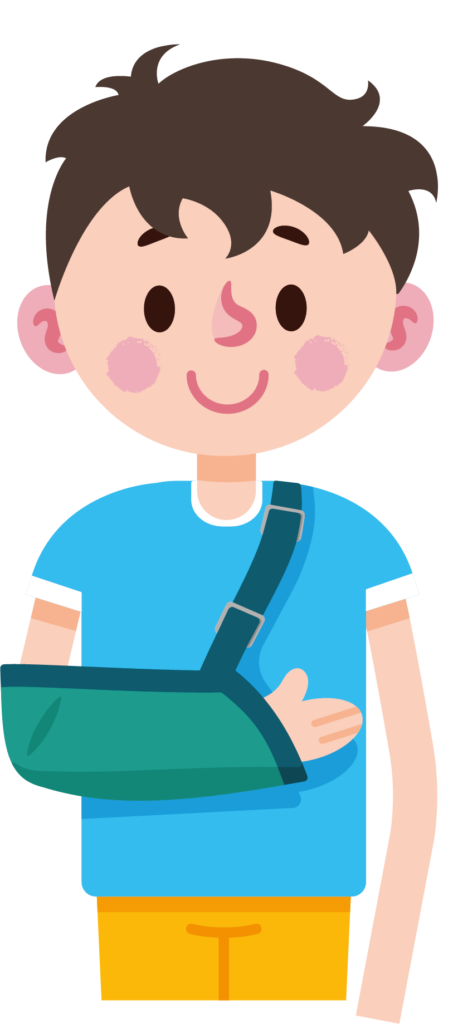
An arm sling is recommended, it is a one-piece fabric that wraps around the arm, with a strap that goes around the neck for support, as seen in the image.
How long must the arm be in a sling?
- The sling should be used for a week under clothes followed by a week over clothes, as shown in the below diagram.
- Exercise is very important. Your child should be encouraged to move their fingers and hand as soon as they can.
- After two weeks, the sling should no longer be necessary and gentle movement of the arm should be encouraged. Once pain allows, your child may be able to take part in noncontact activities such as swimming.
- Your child can go to school but should wear the sling as directed above for the first two weeks and should not take part in any contact or rough sporting activities such as PE for six weeks after the injury.
What happens when your child is sleeping?
The sling should always be removed when your child is sleeping to avoid the risk of strangulation.
Can the sling be removed for washing?
The sling can be removed for washing. If your child leans forward, the arm will naturally move away from the body allowing you to wash under the armpit. It is important to then dry this area thoroughly.
What if my child will not keep the sling on all the time?
Some younger children will not keep their sling on, do not worry. They can use their arm as much as their pain allows and will limit themselves, but they should be stopped from rough play.
Will it be painful?
The injury can be very painful at first but will settle down with time. It is often particularly uncomfortable in bed and sleeping propped up on extra pillows may help. Pain relief like Paracetamol or Ibuprofen could be used to ease the discomfort. Please do ensure you read the instructions for any medication you give your child and do not exceed the maximum dose.
Will there be any other symptoms to look for?
For the first few days, the skin over the fracture may be bruised and this will settle down on its own over the first week.
A lump may develop over the injury site, which will be tender to start with (because of the bruising and soft tissue swelling). With time, it may be hard and painless (as a healing new bone). This lump may persist for months, but, especially in the younger child, it should eventually get smaller.
99.8% of these clavicle injuries heal very well by themselves and do not require further follow-up.
Are there any exercises that can help boost function?
Yes as seen on pages 6 – 9, there are rehabilitation exercises that can help to prevent further injury, and help to improve your child’s function and use of their arm. Completing the exercises could help prevent their shoulder from becoming stiff.
- It is important for the first two weeks that the sling is worn throughout the day, but can be taken off when performing Stage 1 exercises.
- Stage 1 exercises can be performed immediately, However, Stage 2 exercises should begin three days after engagement with Stage 1 exercises, or as pain allows.
- The elbow should not be raised above shoulder height while conducting these exercises.
Exercises for Stage 1 (3 – 4 times a day)
Elbow bend and straighten
Your child should gently bend and straighten the elbow of their injured arm, feeling a mild to moderate stretch. If needed, they can use their other arm to assist.
Do not push if it causes pain.
Repeat 10 times.
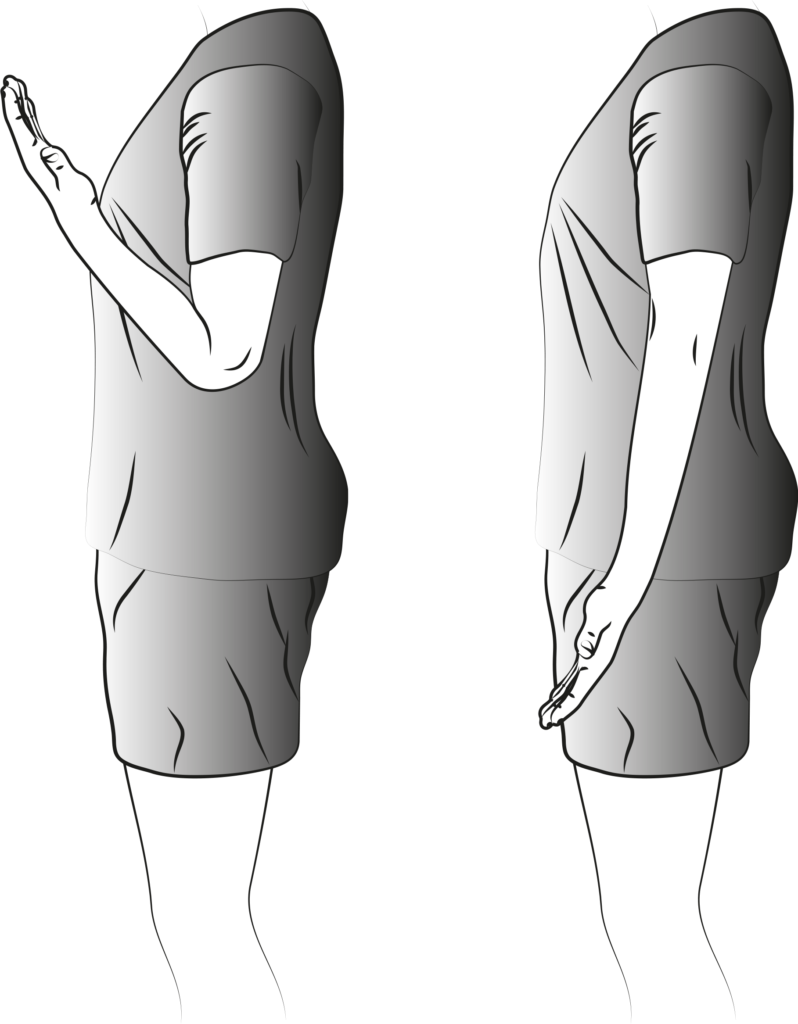
Forearm rotations
Your child should rest the elbow of their injured arm by their side, bending it to a 90-degree angle. They should then slowly rotate their palm to face upward and then downward until they feel a mild to moderate stretch. If necessary, they can use their other arm for assistance.
Do not push if it causes pain.
Repeat 10 times.

Finger and wrist flexion and extension
Your child should move their wrist up and down.
Repeat 10 times.
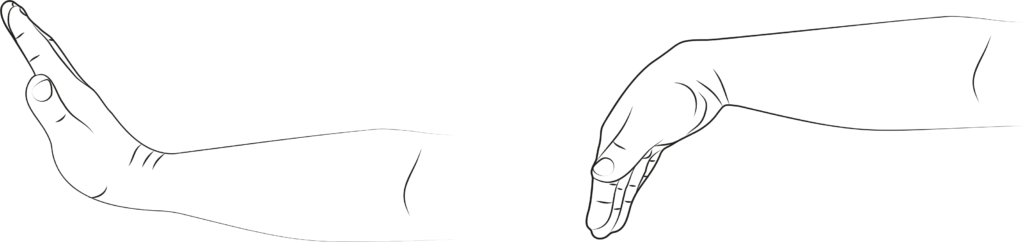
Finger flexion and extension
Your child should open and close the hand of their injured arm 10 times as demonstrated.
After a few days, they can hold a soft ball or a ball made of socks and squeeze it as hard as possible without experiencing pain. They should hold the squeeze for five seconds.
Repeat 10 times.

Exercises for Stage 2 (3 – 4 times a day)
(Should be started three days after Stage 1 exercises or as pain allows)
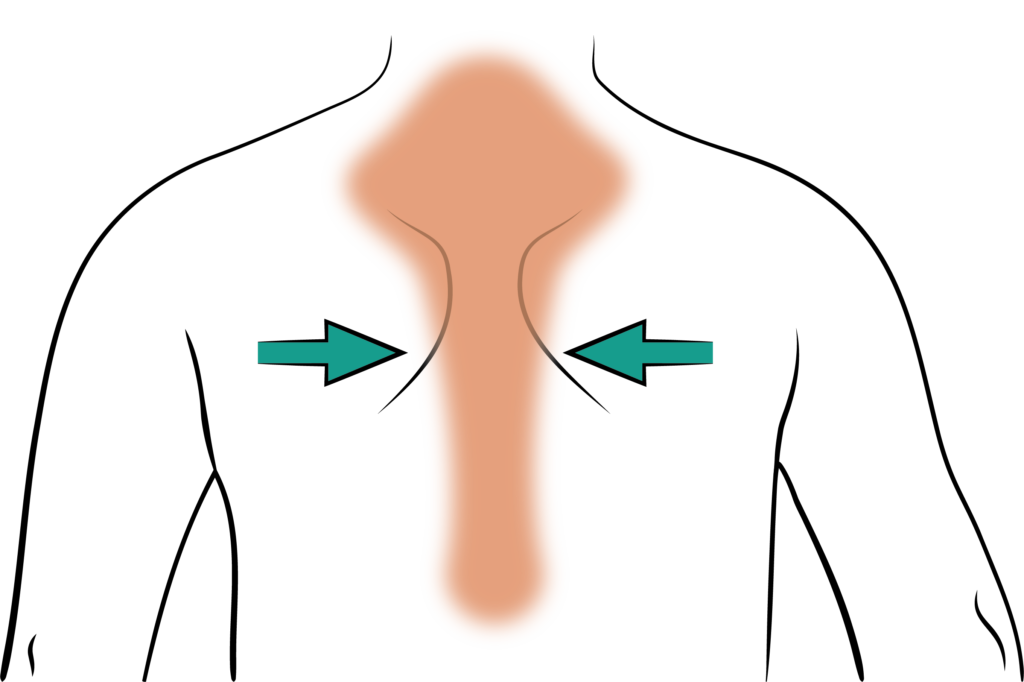
Scapula squeezes
Your child should bring their shoulders back and squeeze their shoulder blades together as shown in the picture. Do this with or without the sling on. Hold the position for 20 – 30 seconds.
Repeat five times.
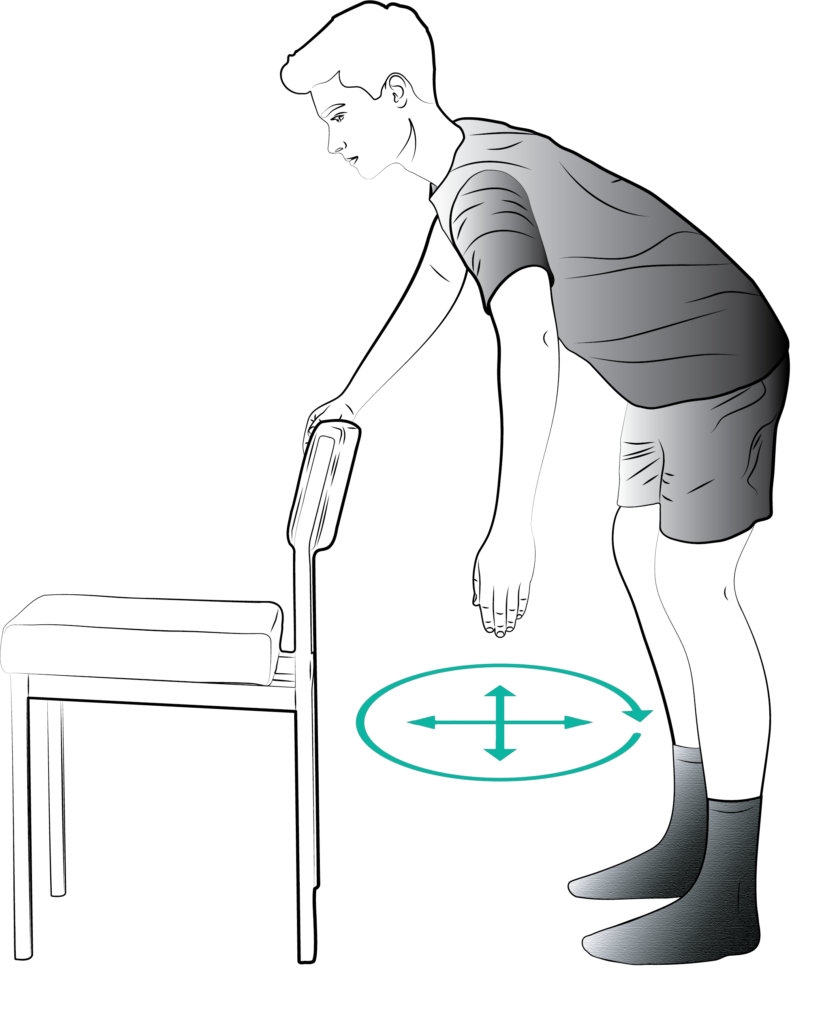
Shoulder pendulum exercises
Your child should stand and lean forwards supporting themselves with the other hand. They should try to relax their injured arm and let it hang down.
- Swing the arm slowly and gently, forwards and backwards.
- Swing the arm slowly and gently, side to side.
- Swing the arm slowly and gently, in circles clockwise.
Continue for approximately one to two minutes in total.
When should I contact a doctor?
- If your child has an extraordinary amount of pain despite regular pain relief.
- The skin around the bruising appears to be breaking down.
- There is tingling or altered sensation e.g. pins and needles in the arm on the affected side.
- Your child has difficulty breathing or is short of breath as a result of the injury.
