
Higher Level Exercises (6+ weeks)
Restrictions to range of movement are removed at 6 weeks, with natural healing deemed sufficient at this point. However, a graded introduction with caution is advised, gaining control and endurance into positions which challenge the stability of the shoulder.
The advanced higher-level exercises aim to support individuals to return to occupations and sporting activities where there are substantial demands on the shoulder, building the long-term exercise programme which may be beneficial to integrate into your lifestyle for long term independent management.
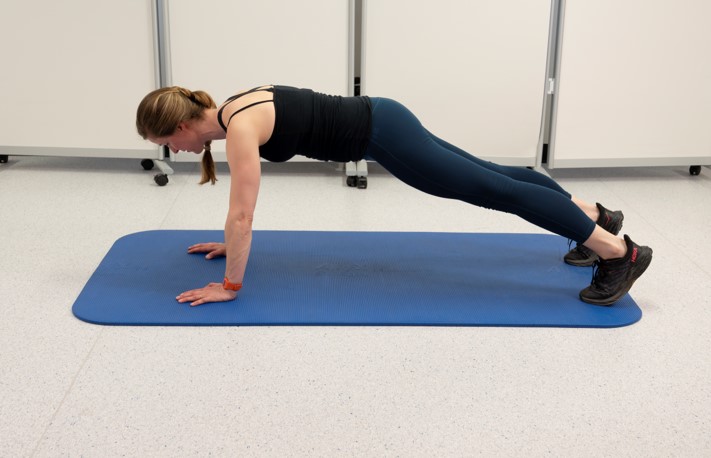
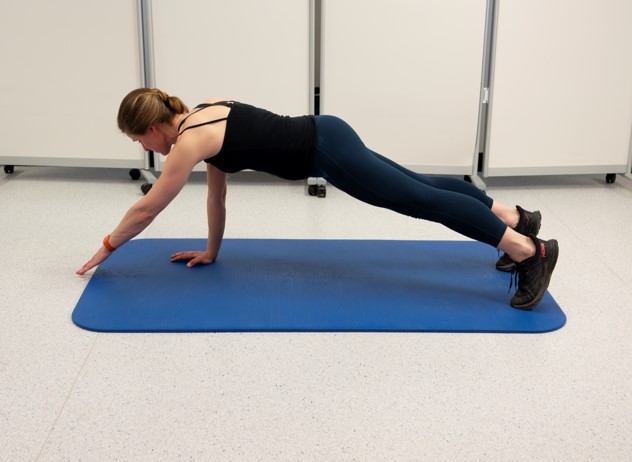
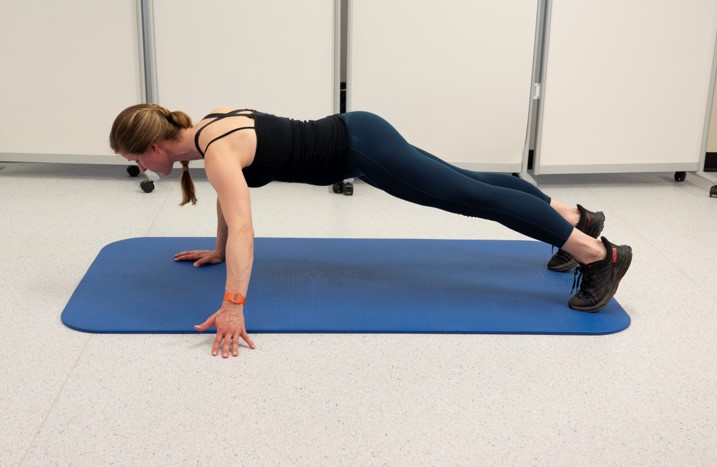
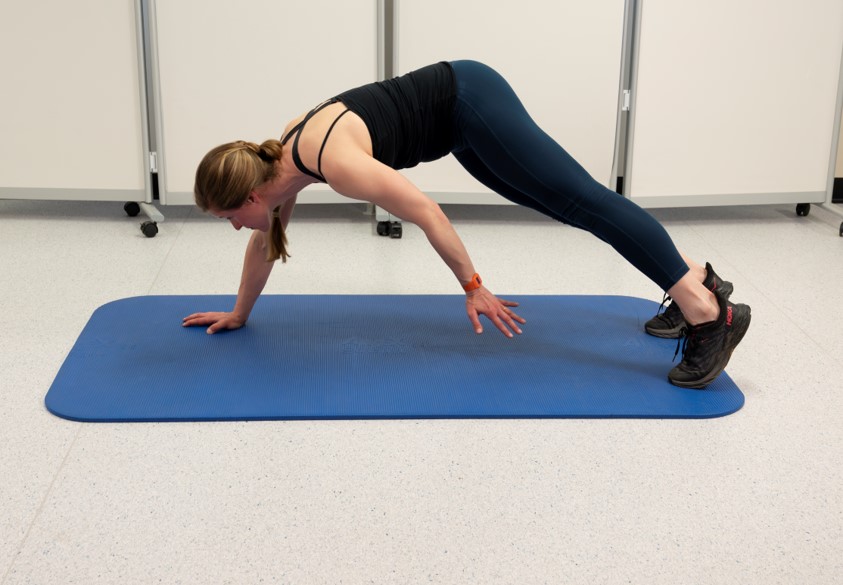
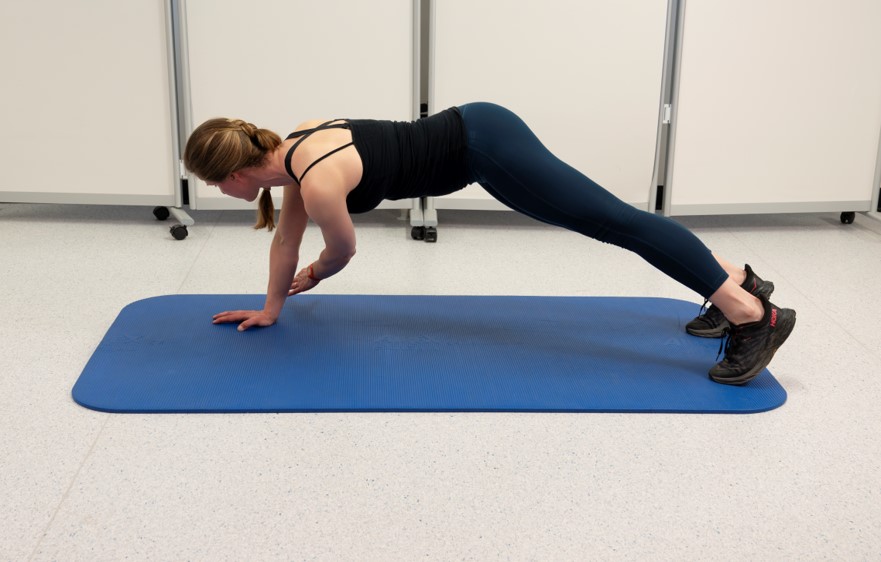
Single Handed Crosses in Push-up Position
- Start in a one-handed press up position weight-bearing on the affected arm.
- Shift your bodyweight through the affected arm by pointing with the other hand in the shape of a cross.
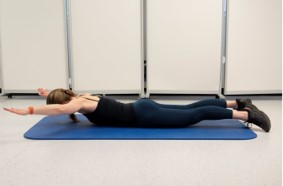
Prone W & Y
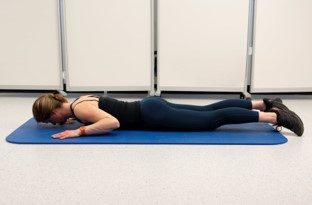
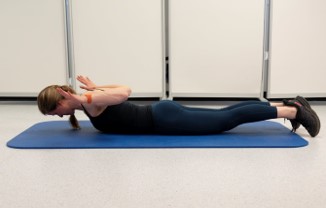
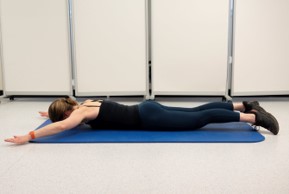
- Lying face down, form a “W” shape with your arms (elbows bent and pulled back towards your sides), and lift your arms off the floor, squeezing your shoulder blades together.
- This series can include the positions of “I,” “T,” and “Y”.
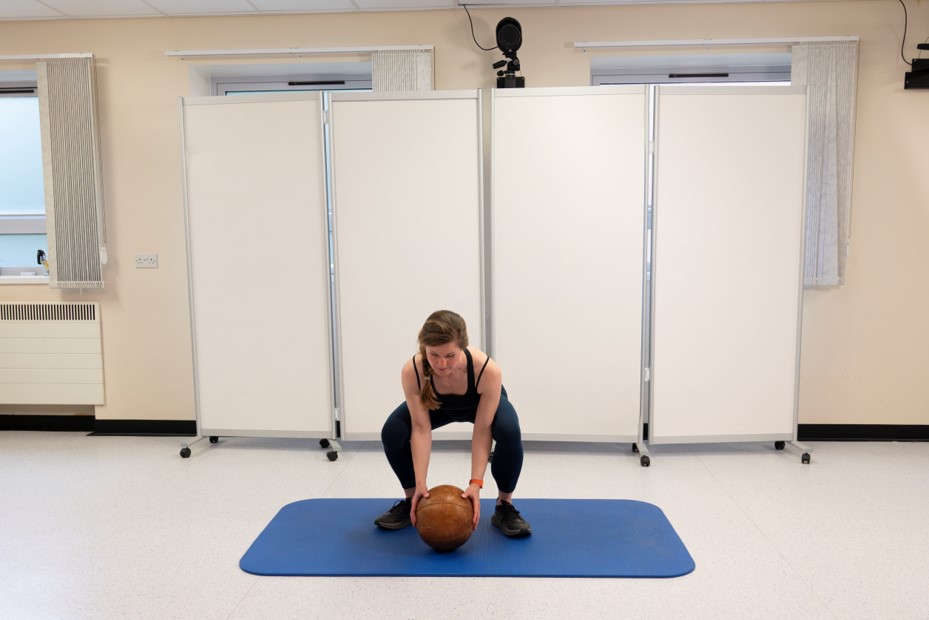
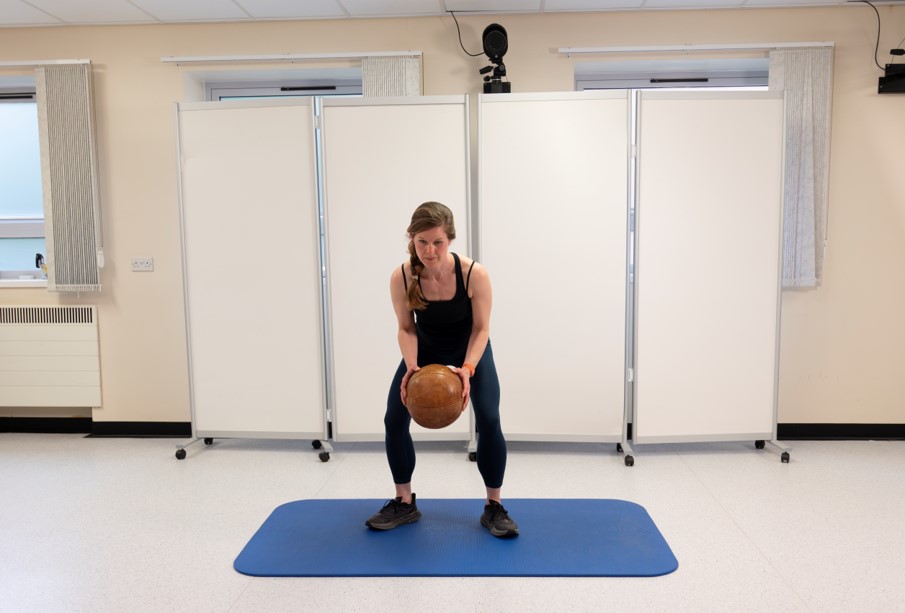
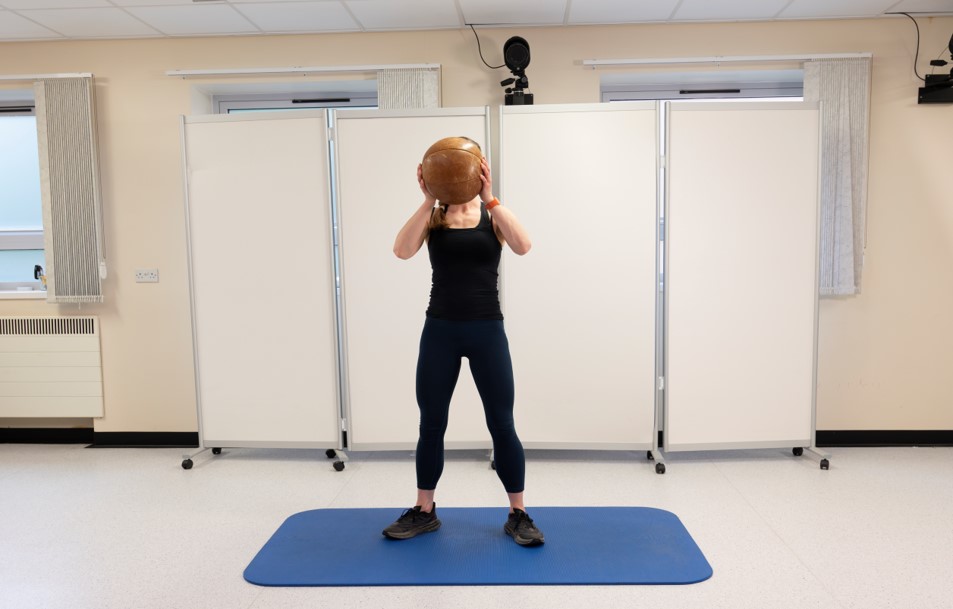
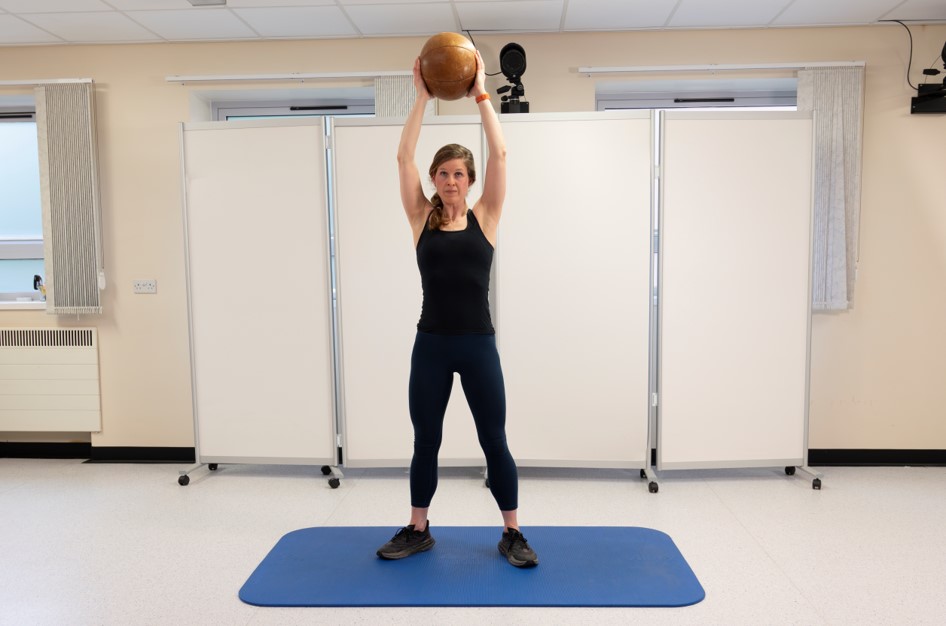
Overhead snatch with medicine ball
- Begin in a squat position, holding onto a weighted ball.
- Using thrust from your lower limbs, bring the ball up vertically to chest height.
- Press the ball overhead.
- Slowly lower back to the start position.
Unilateral and Bilateral overhead press
- Place your hands flat on a gym ball slightly wider than shoulder width apart.
- Extend your legs behind you and come up onto your toes.
- Brace your core to maintain a neutral spine position and bend at the elbows to lower your chest to the ball, maintaining a neutral spine.
- Push firmly through your hands to straighten your arms and return to the starting position.
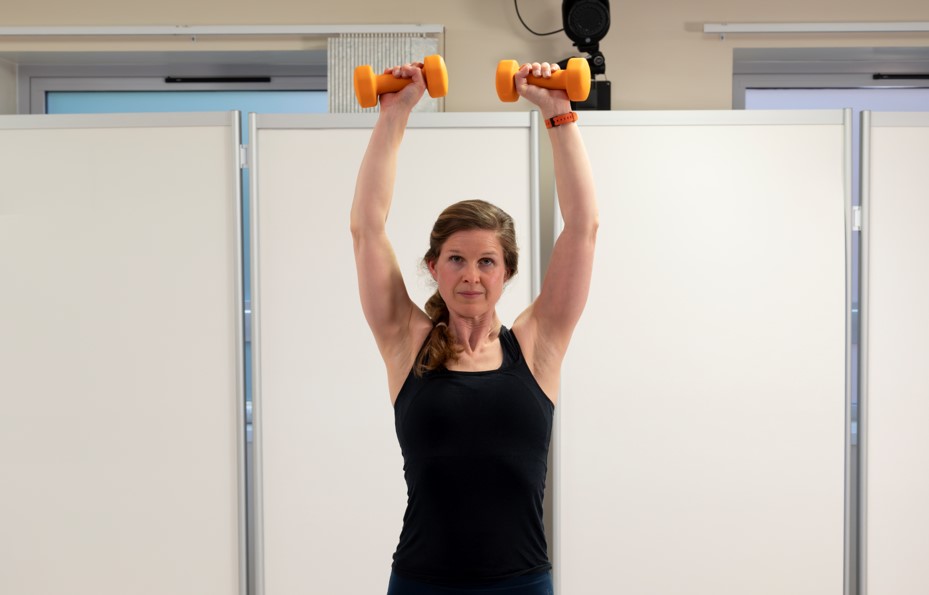
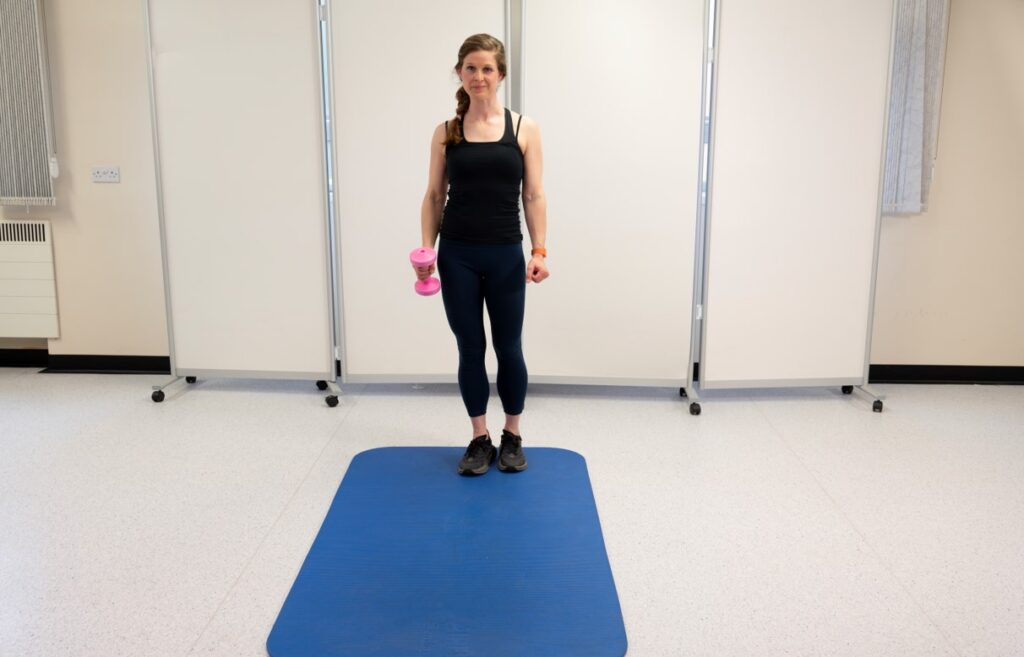
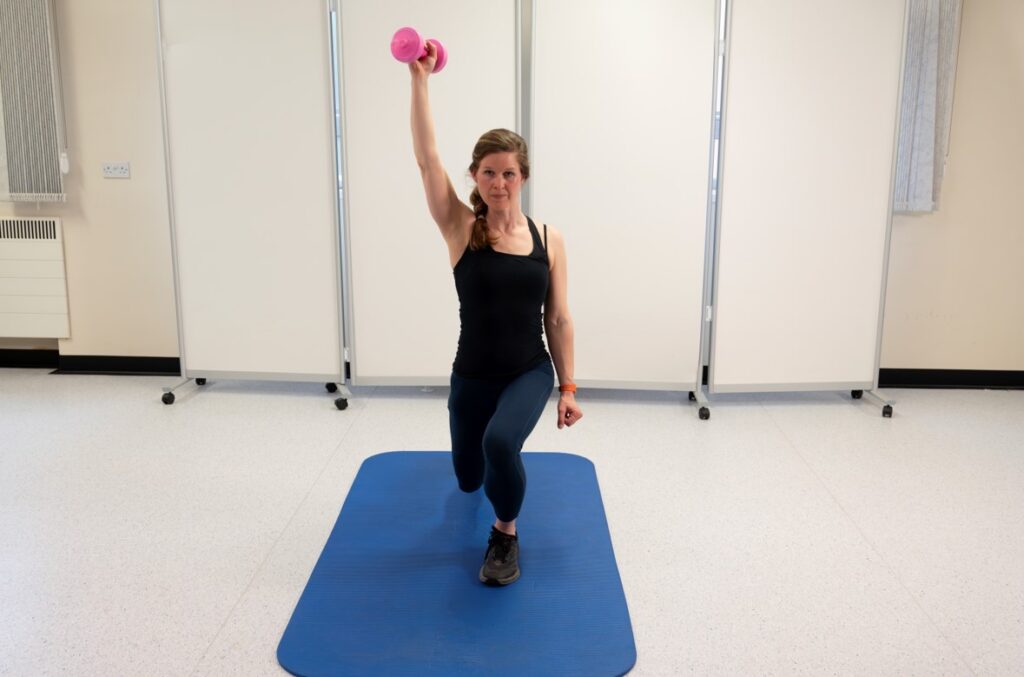
Lunge with over head press
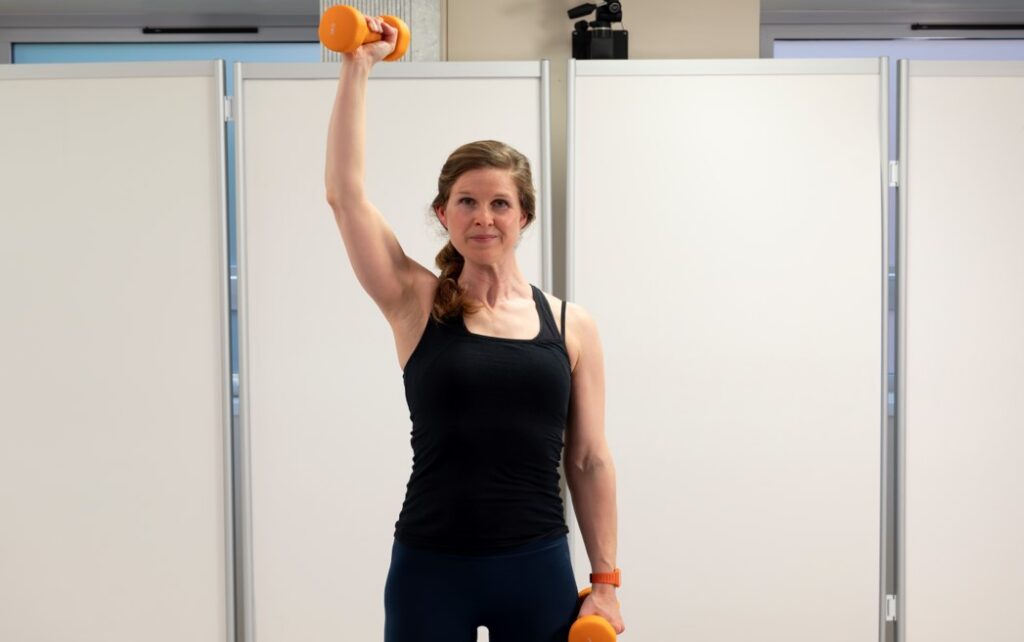
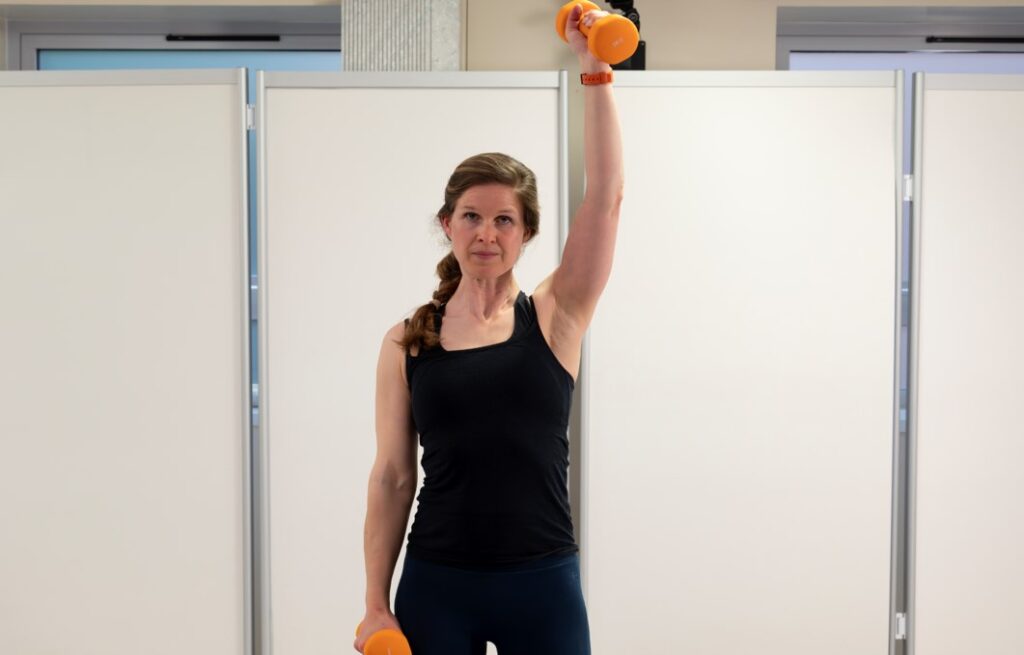
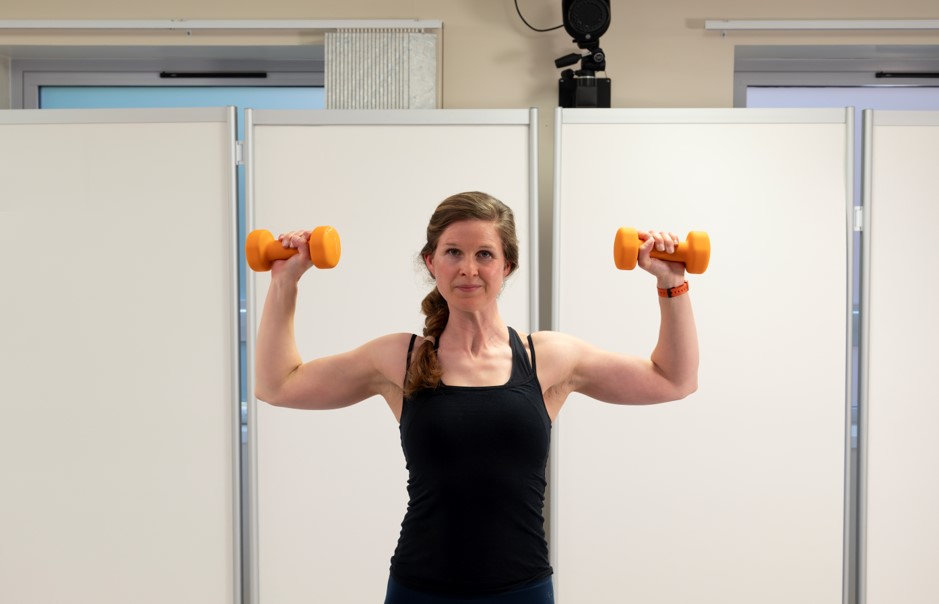
- Stand with your feet shoulder width apart and a dumbbell in your hand.
- Press the arm with the weight overhead as you luge forward with the contralateral leg.
- Push back from the lunge position from the front foot and simultaneously bring the elevated arm back down to the start position.
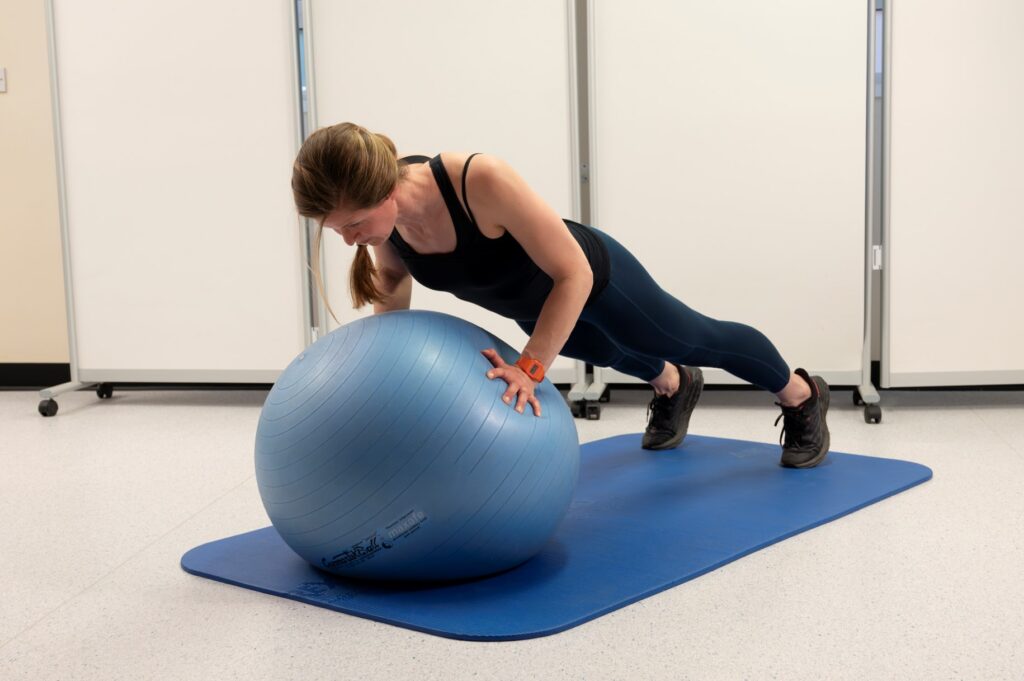
Push up Gym Ball
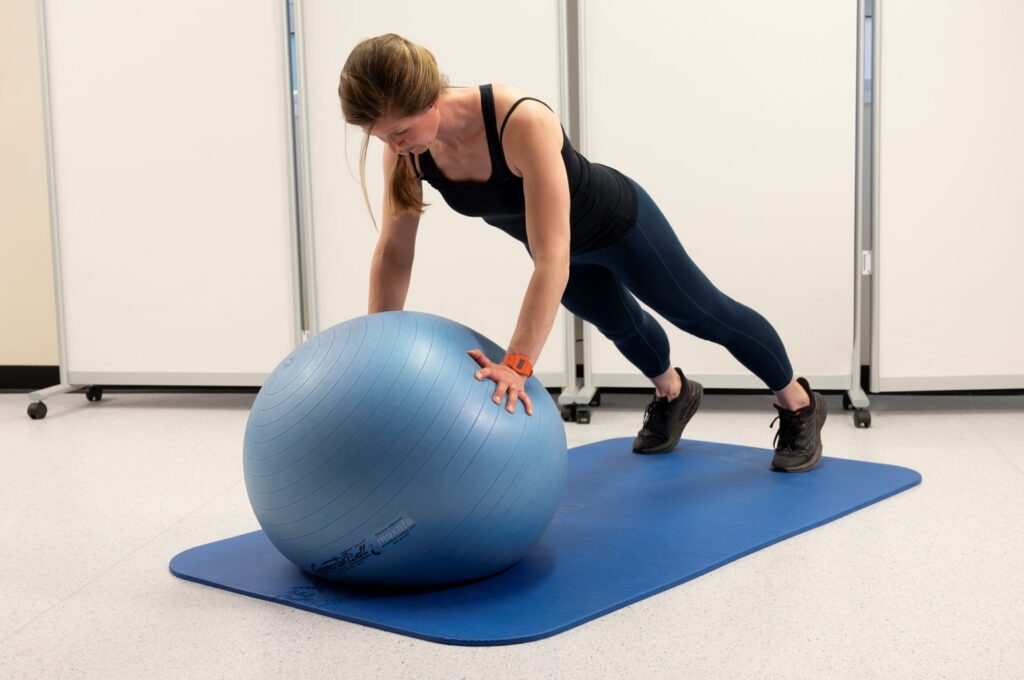
- Place your hands flat on a gym ball slightly wider than shoulder width apart.
- Extend your legs behind you and come up onto your toes.
- Brace your core to maintain a neutral spine position and bend at the elbows to lower your chest to the ball, maintaining a neutral spine.
- Push firmly through your hands to straighten your arms and return to the starting position.
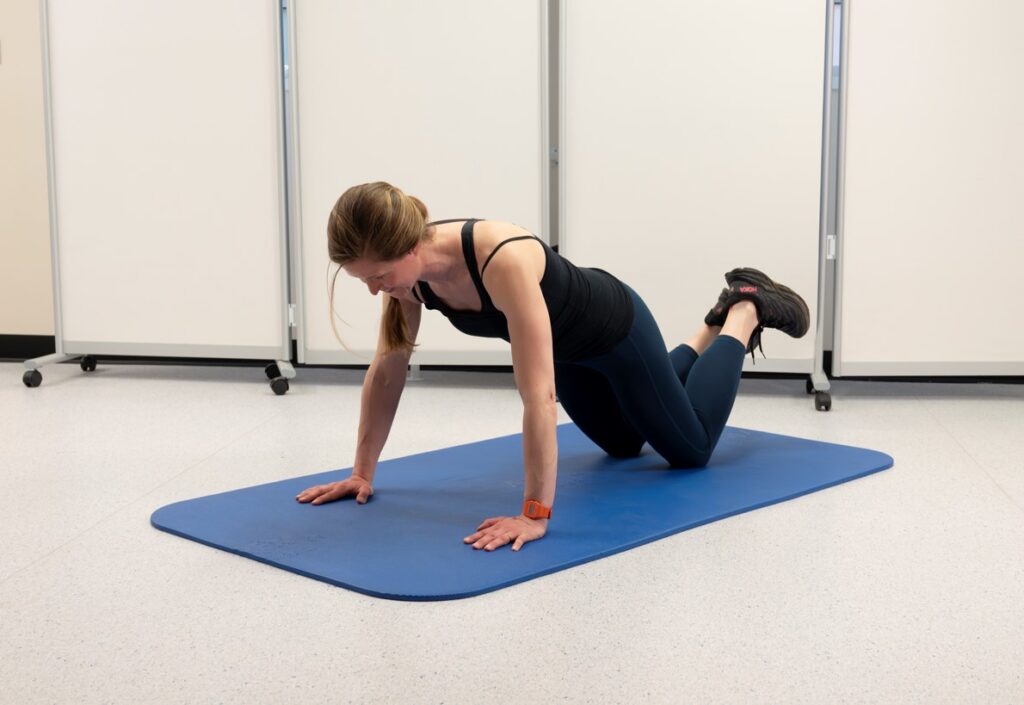
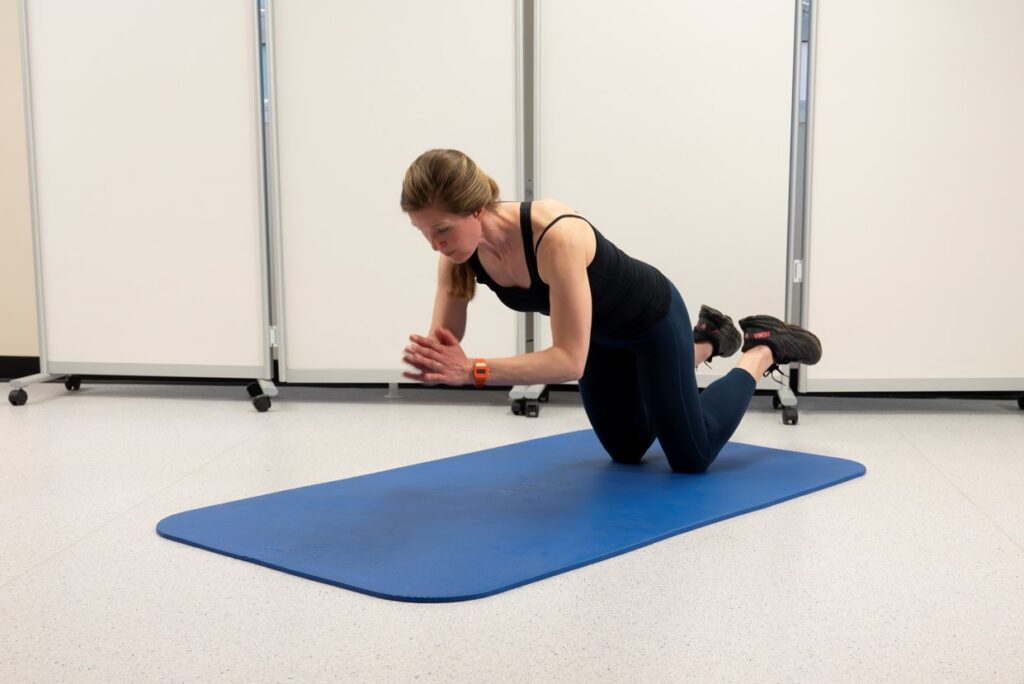
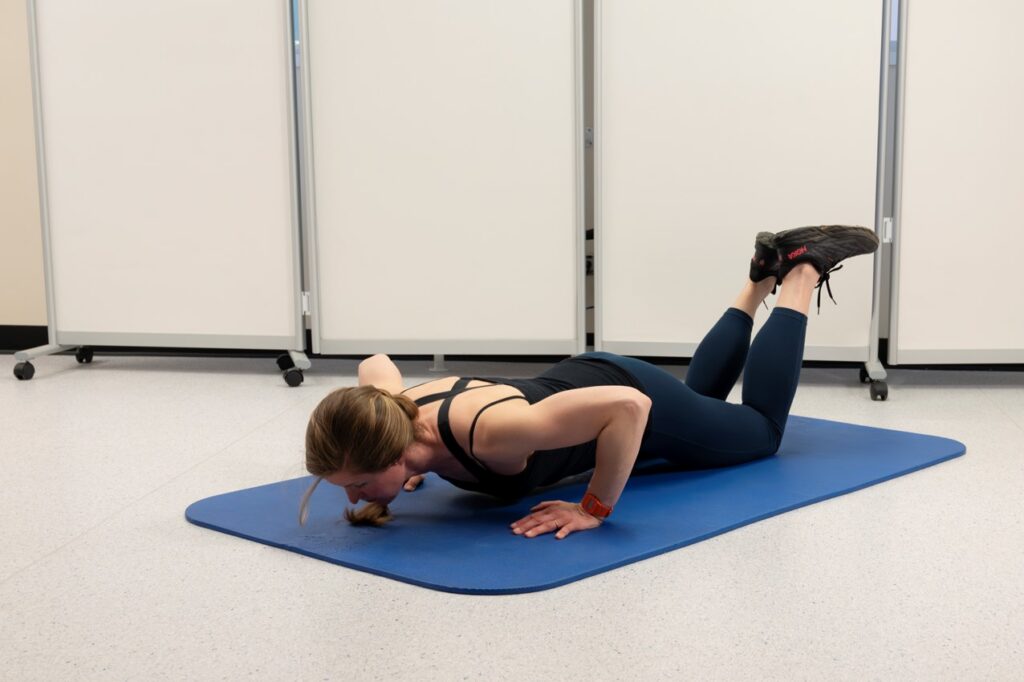
Push Up Clap
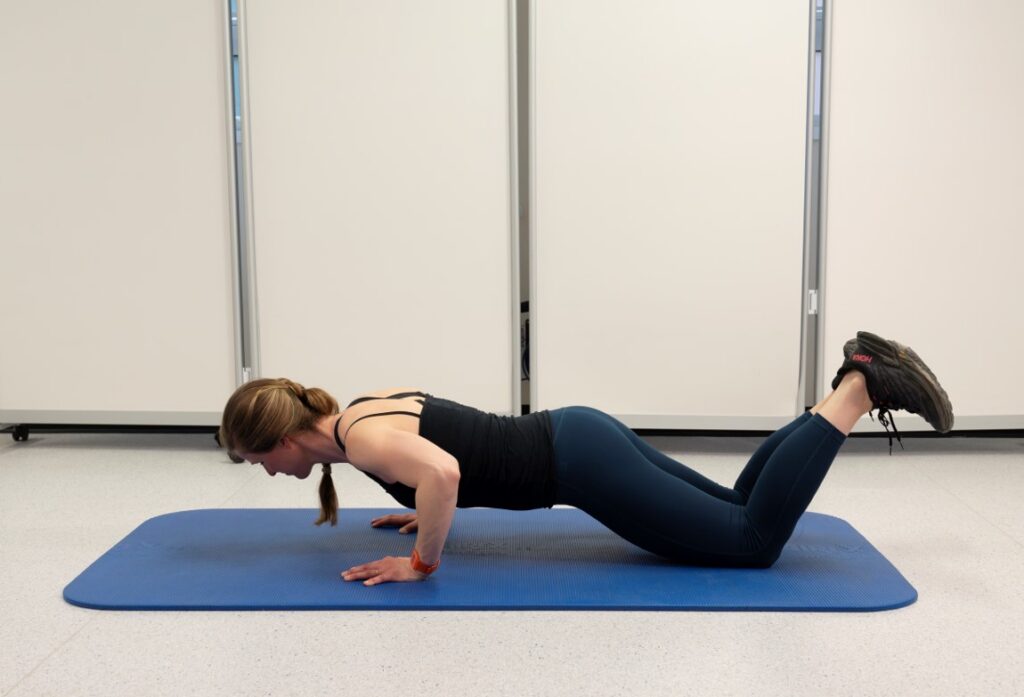
- Starting in a push up position on the knees, perform an explosive push up with clap mid-flight.
- Progress to a full push up position on hands and feet as able.
Roll outs in a plank position
- Adopt a front plank position with your forearms resting on a foam roller. Slowly roll the foam roller away from you to a point where you are able to maintain control then roll it back towards you. Repeat with a smooth rolling action.
- Progress this exercises as you develop strength and feel comfortable to a roll out with your hands on a bar bell in a plank position.
(Images required)
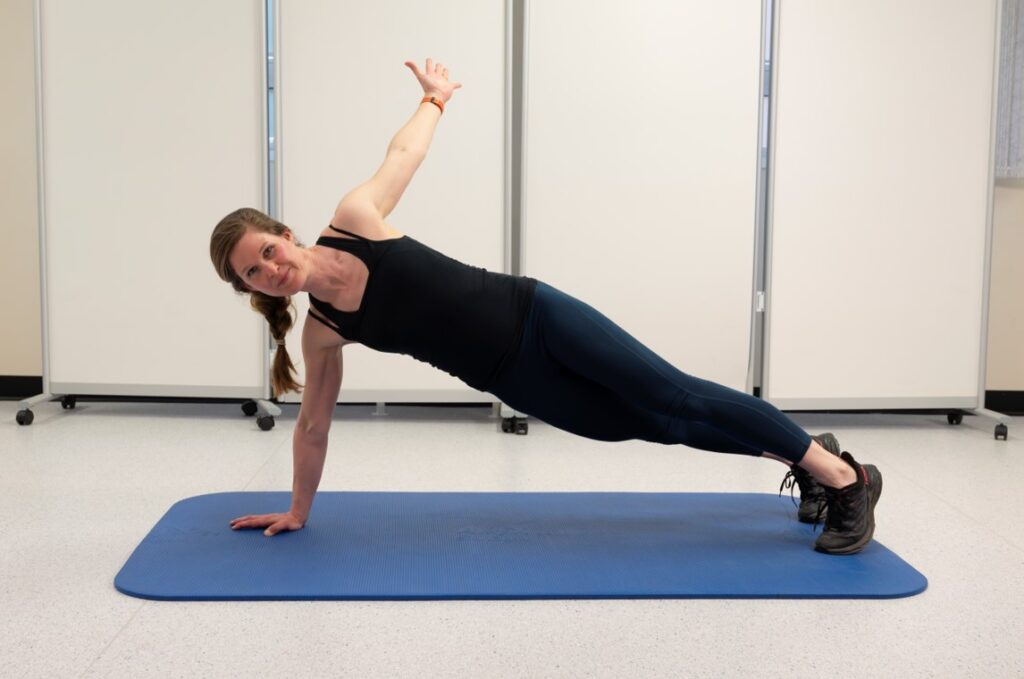
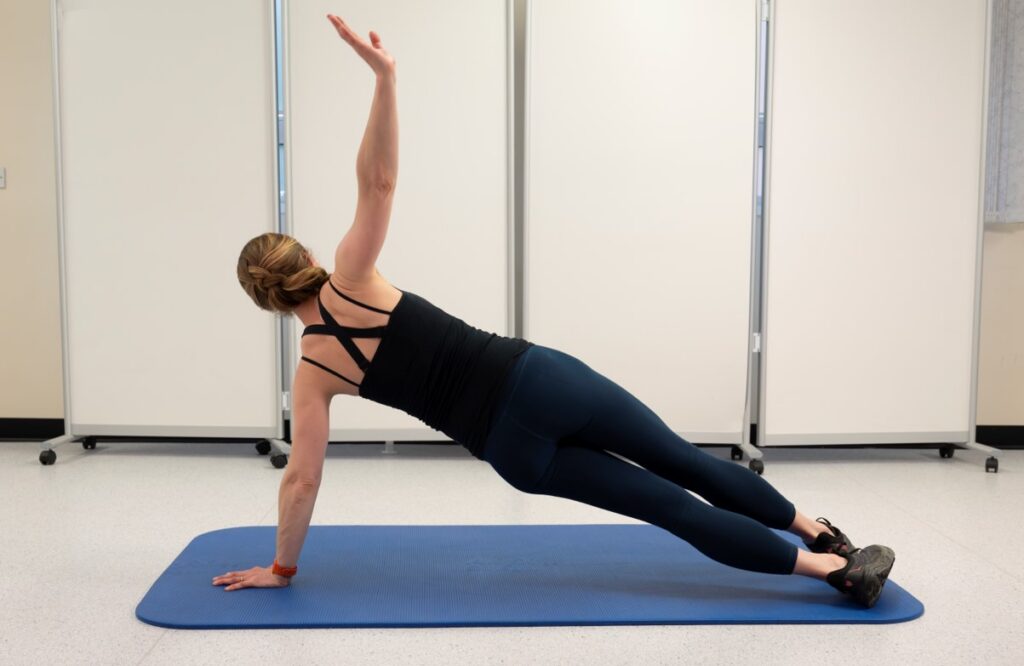
Dynamic Side Plank
- Good strength, control and endurance in a full side plank position is required before progressing to the dynamic side plank.
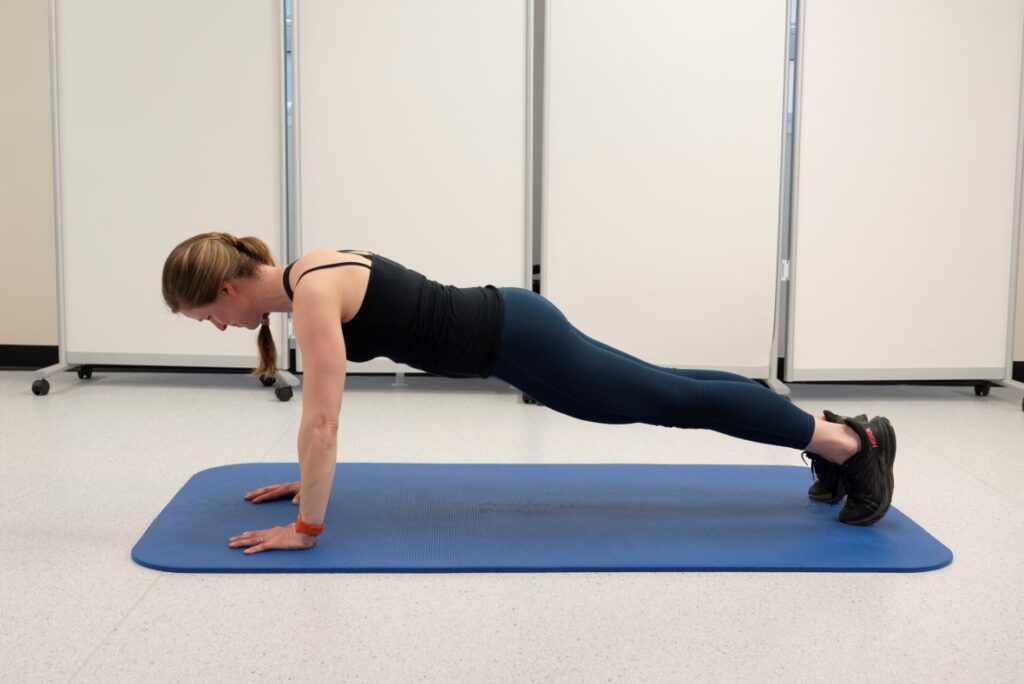
- Begin in a side plank position, with your weight balanced on one hand and both feet.
- Roll your body onto your toes with pelvis parallel with the floor, crossing the top hand over the line between the placed hand and the feet
- Return to the start position to complete the repetition.
Exercise Ball Taps
- With the ball on the wall at 180 degrees of shoulder abduction, bounce the ball on the wall to 90 degrees of abduction and return the ball to the overhead position.
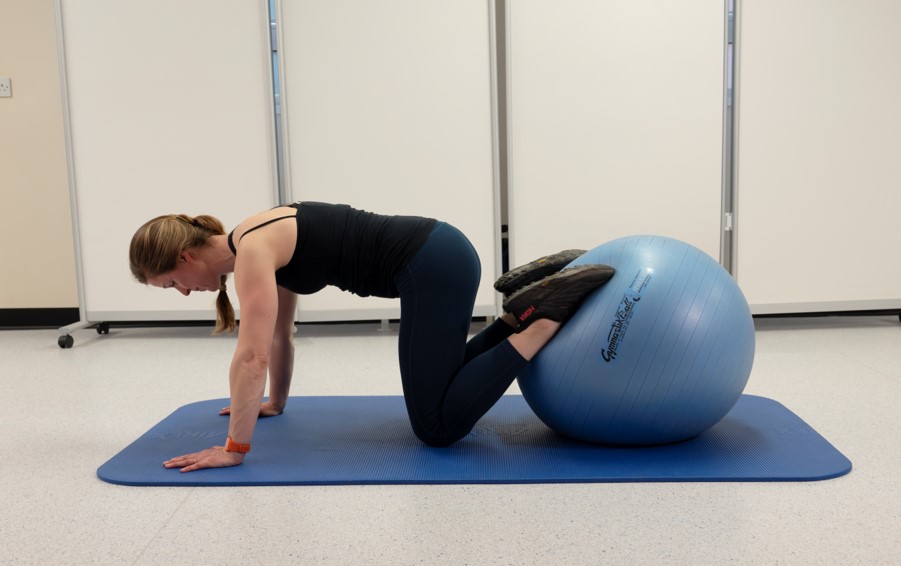
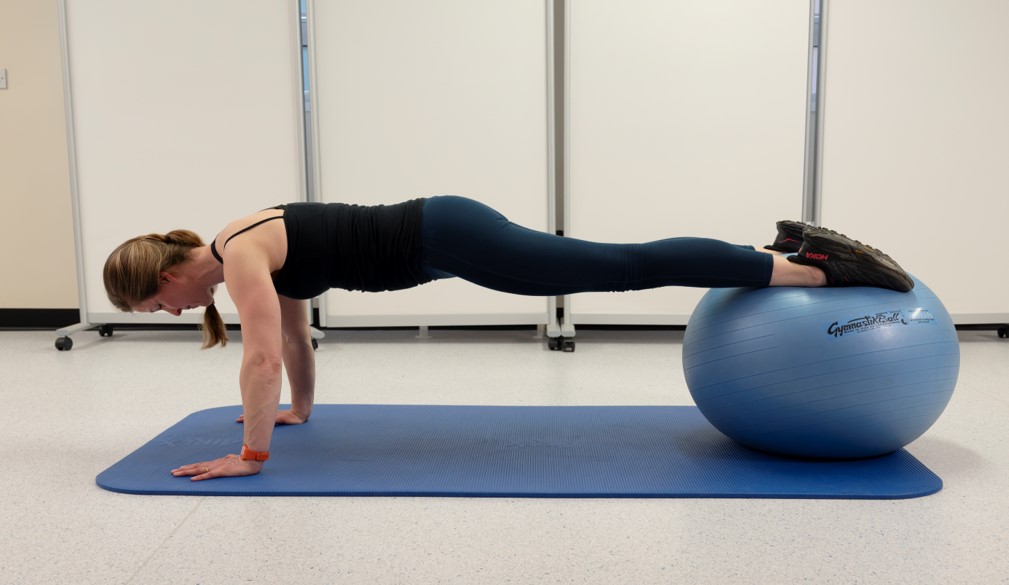
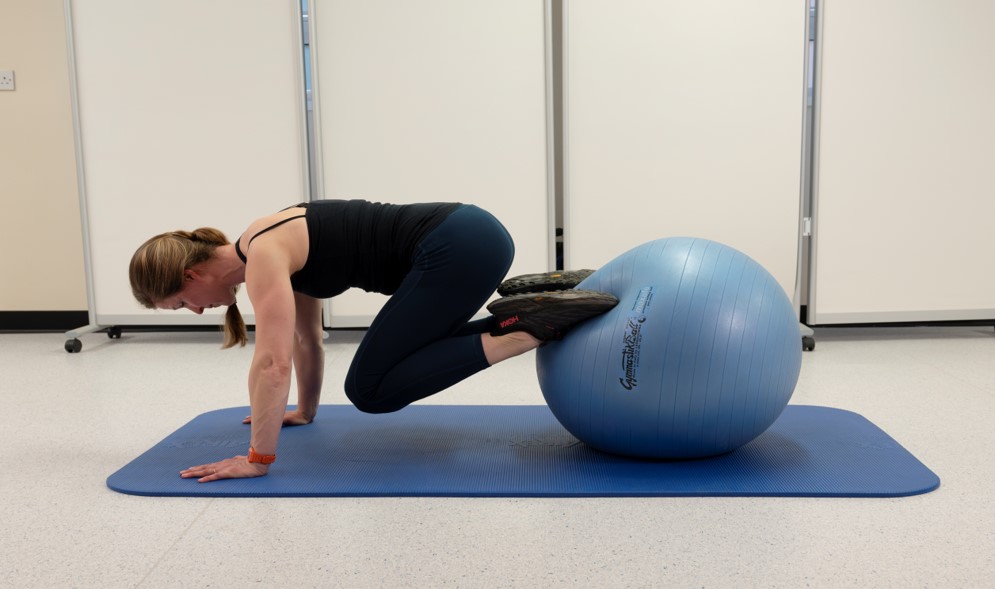
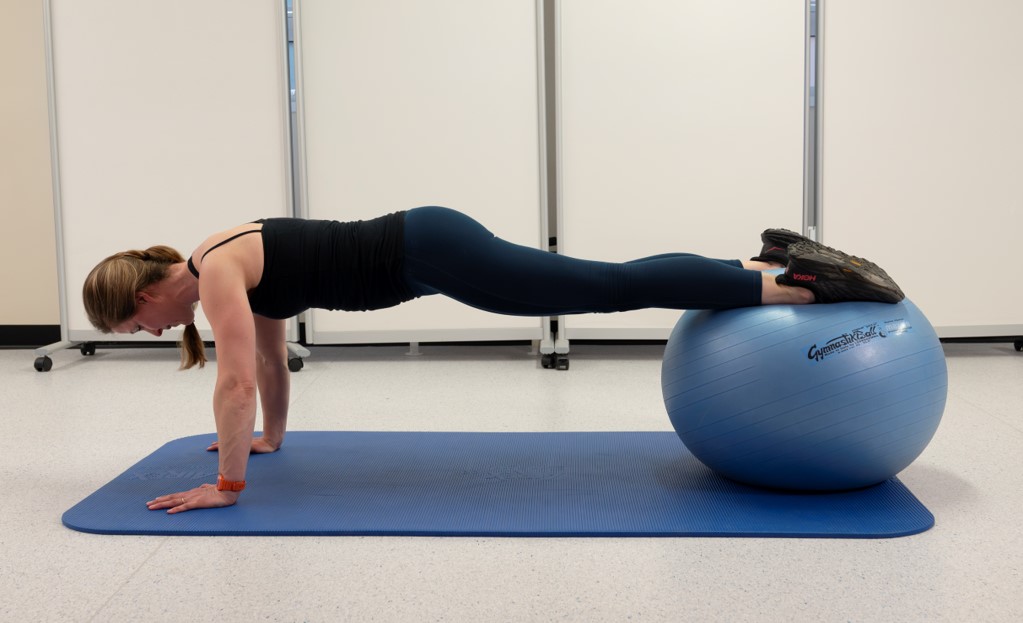
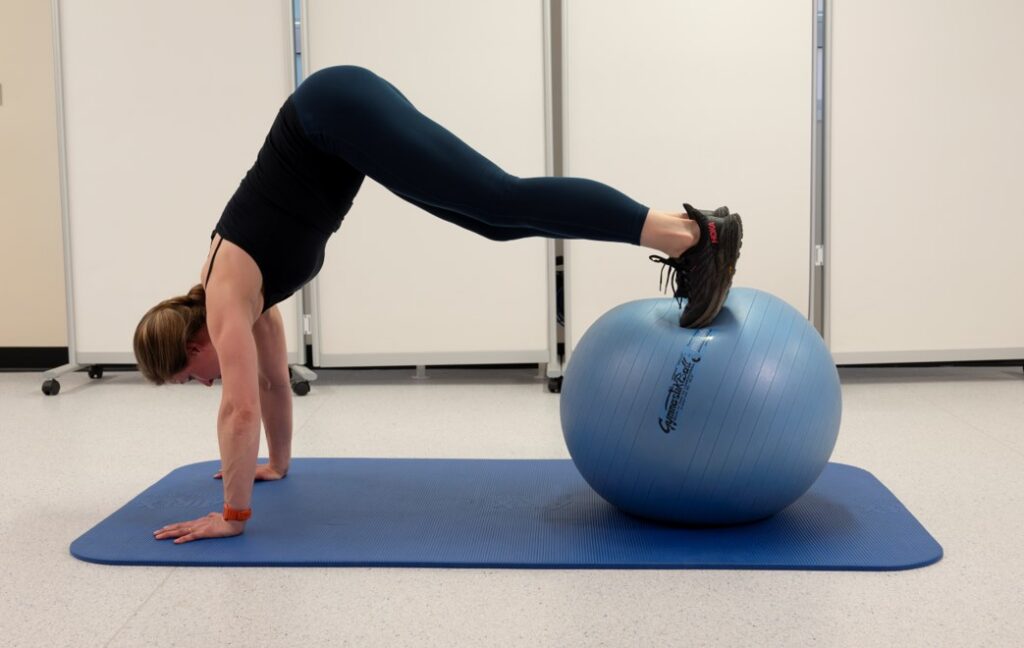
Tuck & Pike on an Exercise Ball
- Start in a plank position with your feet on the ball, hands under your shoulders, and body in a straight line.
- For the knee tuck, pull your knees toward your chest, then extend them back to the starting position.
- For the pike, lift your hips straight up to the ceiling, keeping your legs as straight as possible, and then lower back down to the starting plank.
Falling progressions
From the start positions outlined below, use 2 hands to absorb the impact and push away as fast as possible to return to the original standing position:
- To the wall in standing.
- To waist height from standing.
- From an upright kneeling position to the floor.
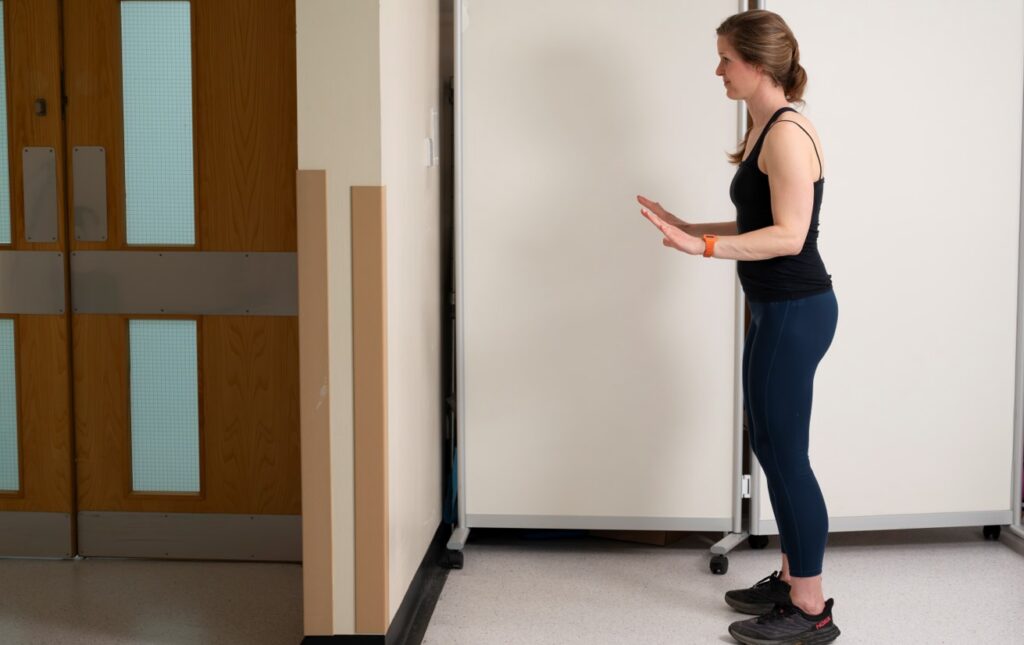
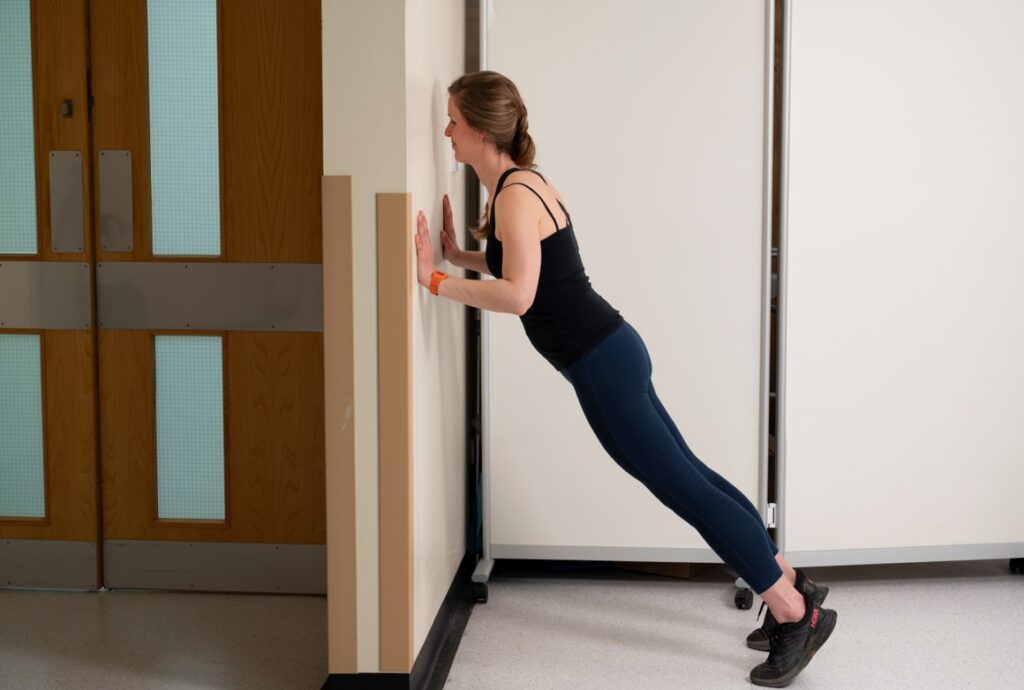
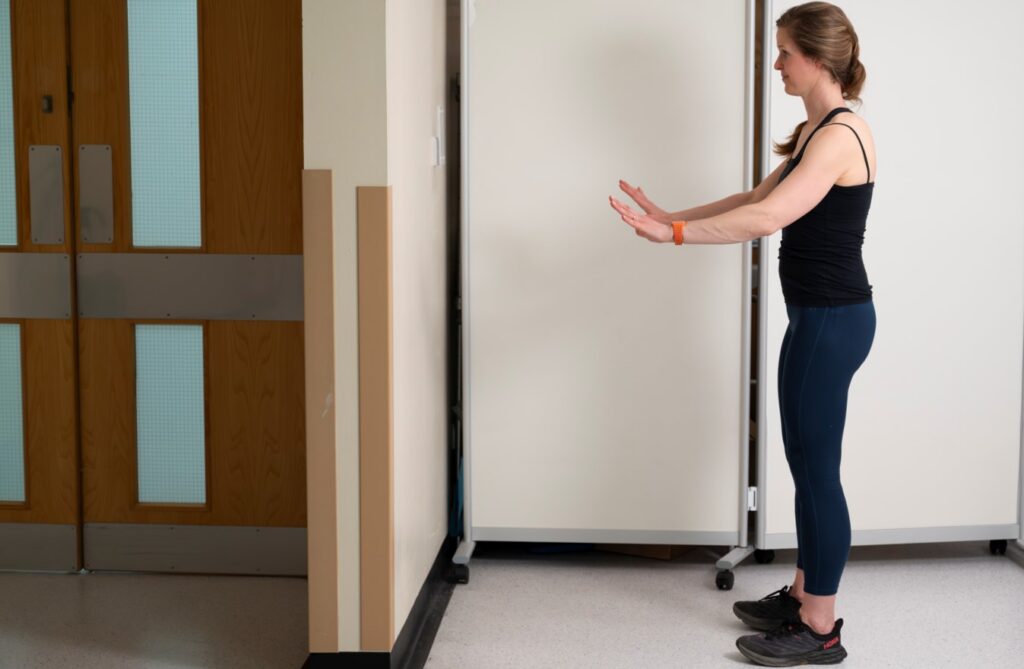
Falling progressions continued.
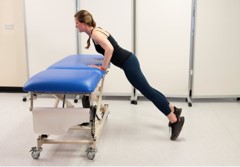
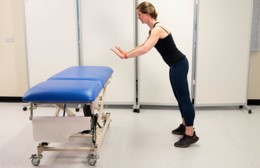
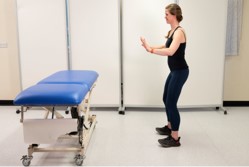
Falling progressions continued.
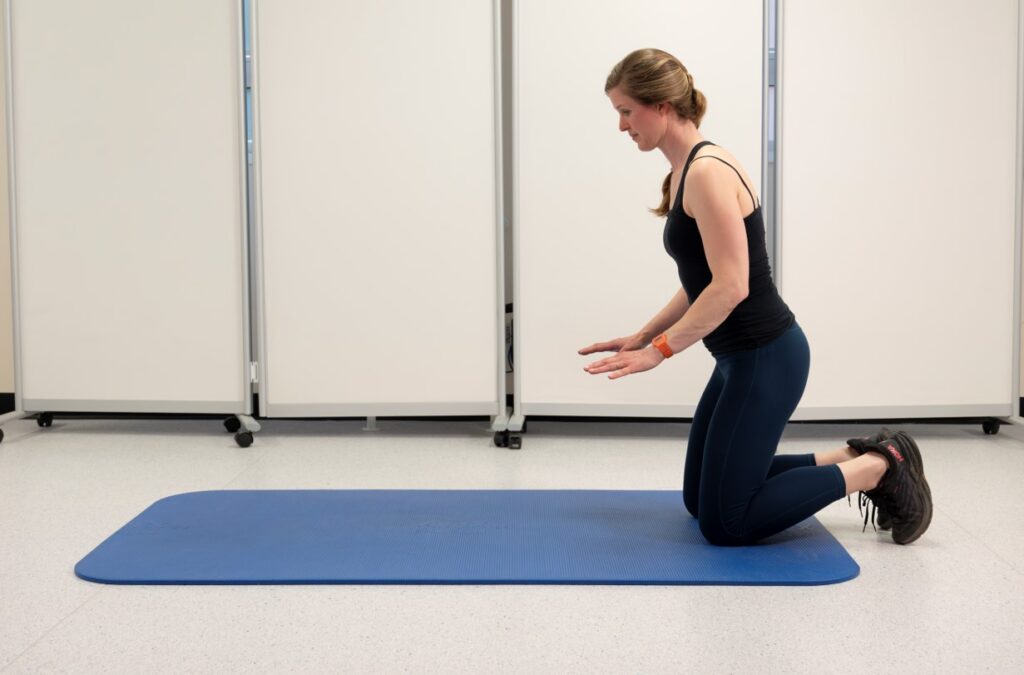
Falling Through a Doorway
Ensure you have good strength,, control and confidence with the introductory falling progressions before attempting this exercise.
- Stand one step away from a doorway.
- Fall through the doorway and catch your bodyweight with two hands on the frame of the door.
- Explosively push back up to the original standing position.
- To increase the difficulty of the exercise, move the starting position further back away from the door frame.
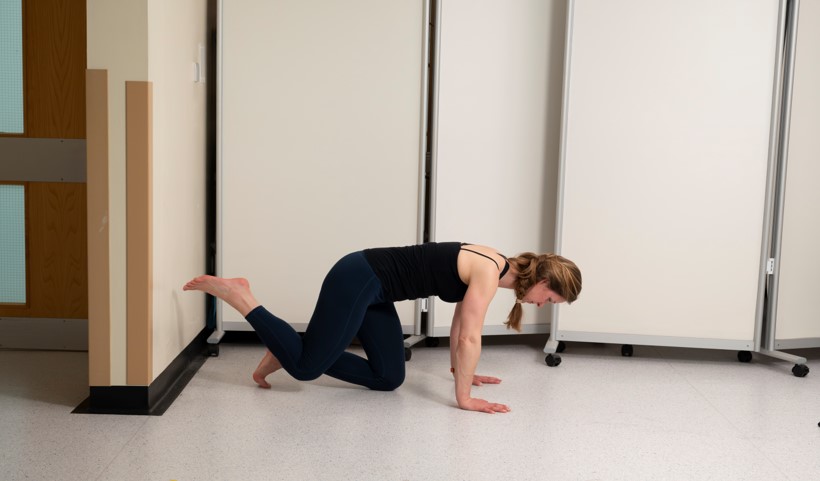
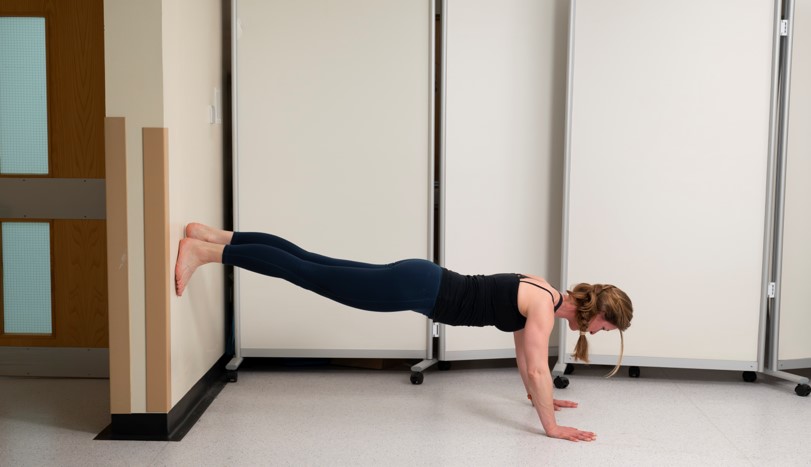
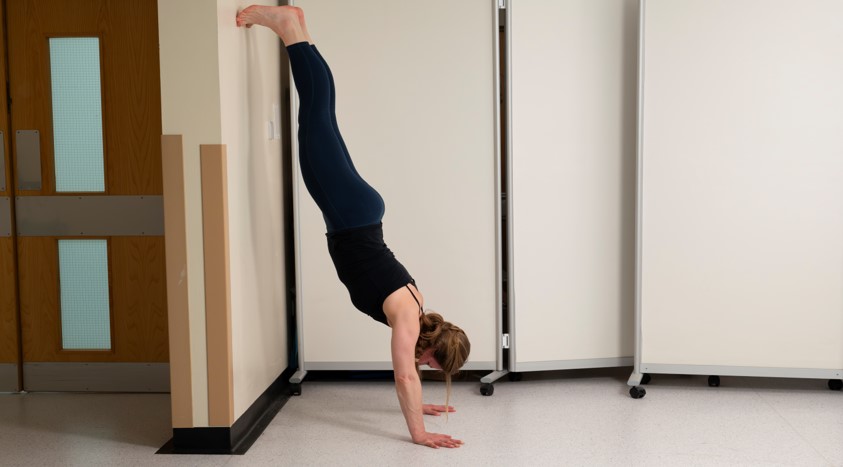
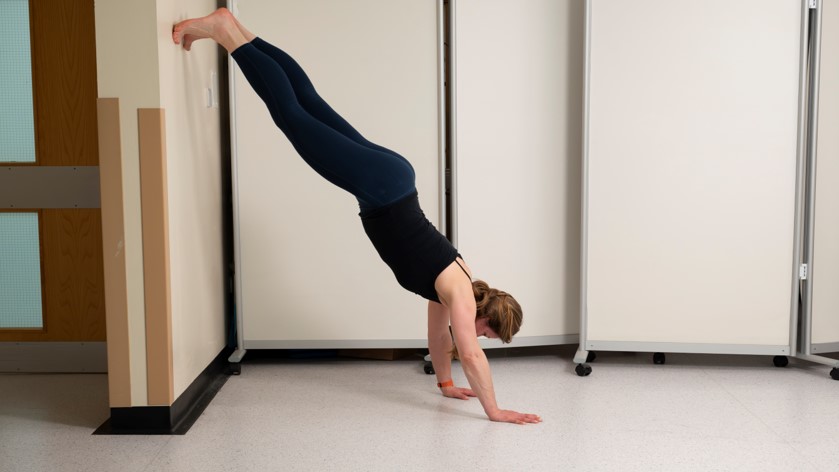
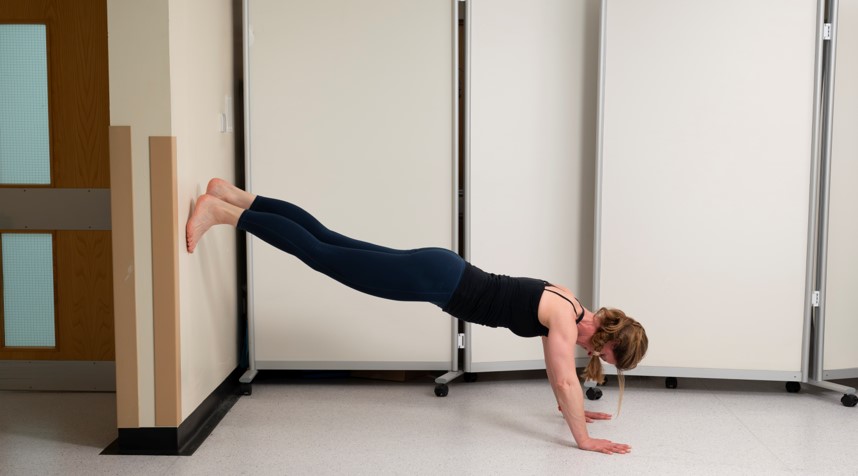
Handstand progression walking feet up the wall
- Start in a plank position with your feet on the wall.
- Gradually walk your feet up the wall, whilst walking your hands towards the wall to maintain a plank position.
- Gradually walk your feet and hands back to the start position, ensuring you do not sag in the middle and do not loose contact with the wall.
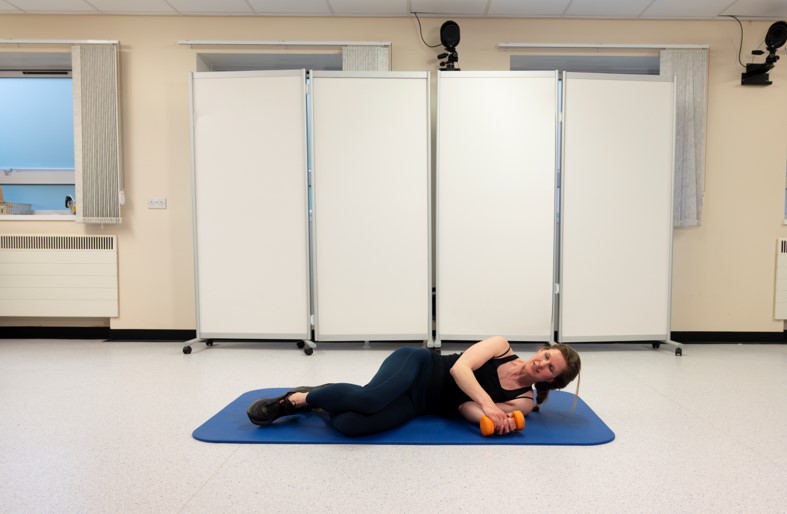
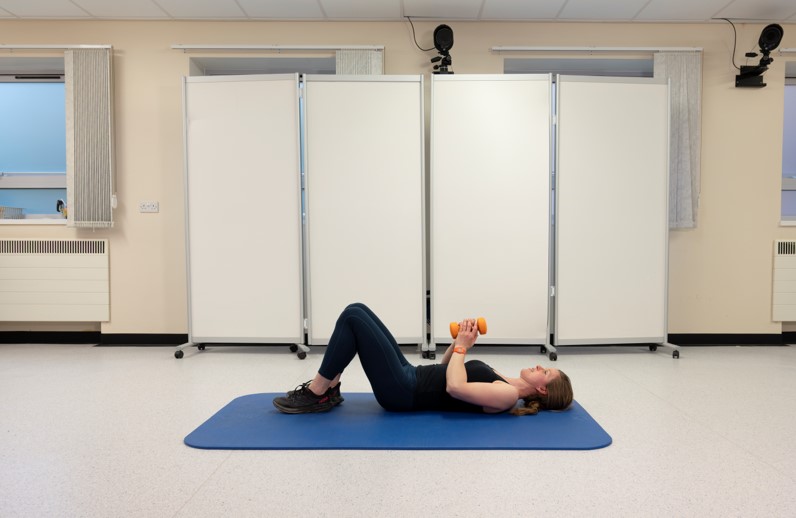
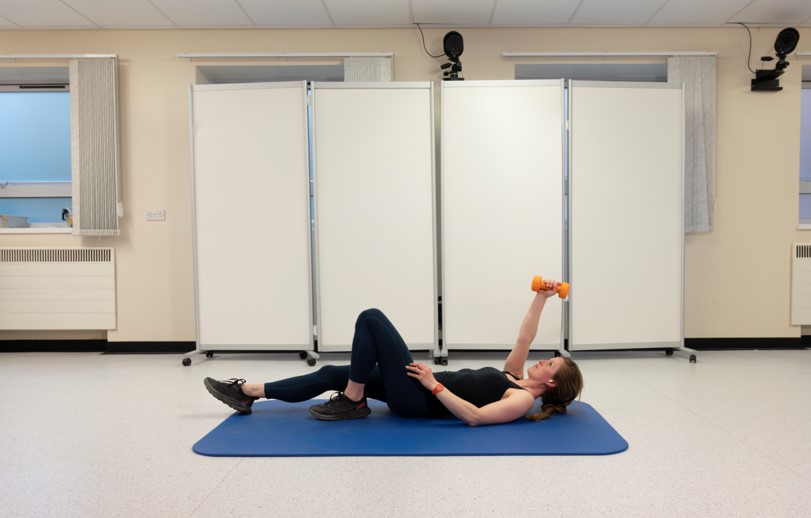
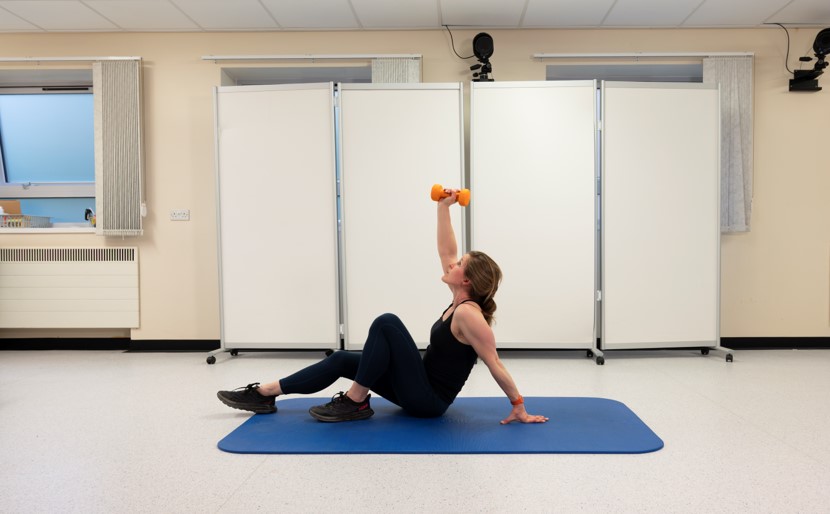
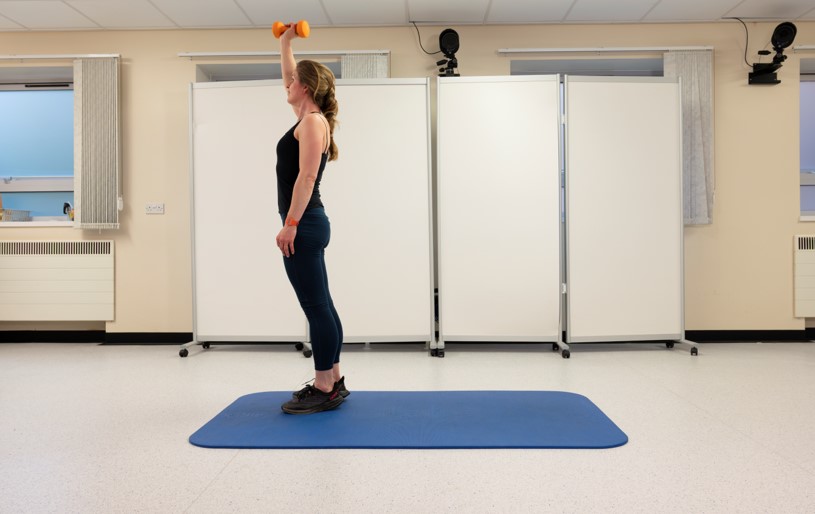
Turkish Get UP
- The setup: lay supine on the floor, grab the handle of the kettlebell with the right hand and press it straight up so it is in line with the shoulder, pack the shoulder down by squeezing the latissimus dorsii, force the grip to neutral, flex up the right hip and knee close to the right gluteal muscle, extend the left arm out to 45 degrees, laying the left palm flat on the ground.
- Braced sitting: Drive the torso up on the left elbow by using the right leg and keeping the eyes on the kettlebell, push from the left elbow to the left hand.
- Low sweep / high bridge: Transition to kneeling can be done by either elevating oneself until the left knee is off the ground little / supporting the body weight on the left arm while the right arm and hips are fully extended. Either way, the left leg is swivelled so that it is completely under the body and placed adjacent to the left hand.
- Kneeling: Move into the kneeling position so that the knee is in line with the hand and foot.
- Standing: Stand fully erect with the kettlebell overhead from the kneeling lunge position. Next, turn back to the lying position.
Pull up progressions
- To build confidence, initially use a low bar such as a Smiths machine to incrementally increase body weight loading in an inverted pull up position.
- Ensure safe use of equipment such as the smiths machine with use of safety stops
- Build up to a full pull up. Bands from the bar under the feet or specialist equipment to allow assisted pull ups may be beneficial.
- Once a full pull up can be performed with confidence and endurance achieved, progression to a “type writer” variation can be explored.
Human Flag Initiation
With one arm on a pull up bar above and the other on the vertical bar, keeping the torso ridged, pull with the top arm and simultaneously push with the lower arm to move the body towards a diagonal position.
Dynamic Hang Exercises
To further challenge hanging exercises and to practice explosive release and catch activities, mini “jumps” with both hands can be performed at the top of the pull up in an inverted pull up position and progressed to a full pull up position.
Inverted Drop/catch can be performed to build dynamic control with the arm in a more extended position. Careful attention and assessment to risk is required to prevent injury and falls.
Throwing Progressions
- Standing with your feet in a staggered stance, ideally the opposite foot forwards to your dominant throwing arm, start with bilateral chest throw. Build up the force, distance and speed applied gradually.
- Progress to using two hands to support a throw from shoulder height and gradually move up to a throwing position utilising more rotation in an overhead position. Again, build up the force, distance and speed applied gradually.
- Gradually build to single arm throwing, applying the principles used above.
Medicine ball/ sand bag ball slams
- Starting with your feet hip width apart, hold a slam ball or slam sandbag in both hands.
- Raise the ball above your head and engage your core. Forcefully throw your hips back and bend your knees slightly to slam the ball or sandbag onto the ground.
- Squat to pick up the ball from the floor or the rebound and repeat.
- Remember to check your equipment and floor is suitable to perform this exercise.
You have completed the Advanced Higher Level Rehabilitation stage
Fantastic! Before you return to full contact and competition, consider comparing your ability to perform the return to sport battery of tests to normative levels, and repeating the outcome measures to assess your level of confidence/ Kinesiophobia with the shoulder which can be found in the Return to sport and Additional resources sections.
Return to sport Additional Resources